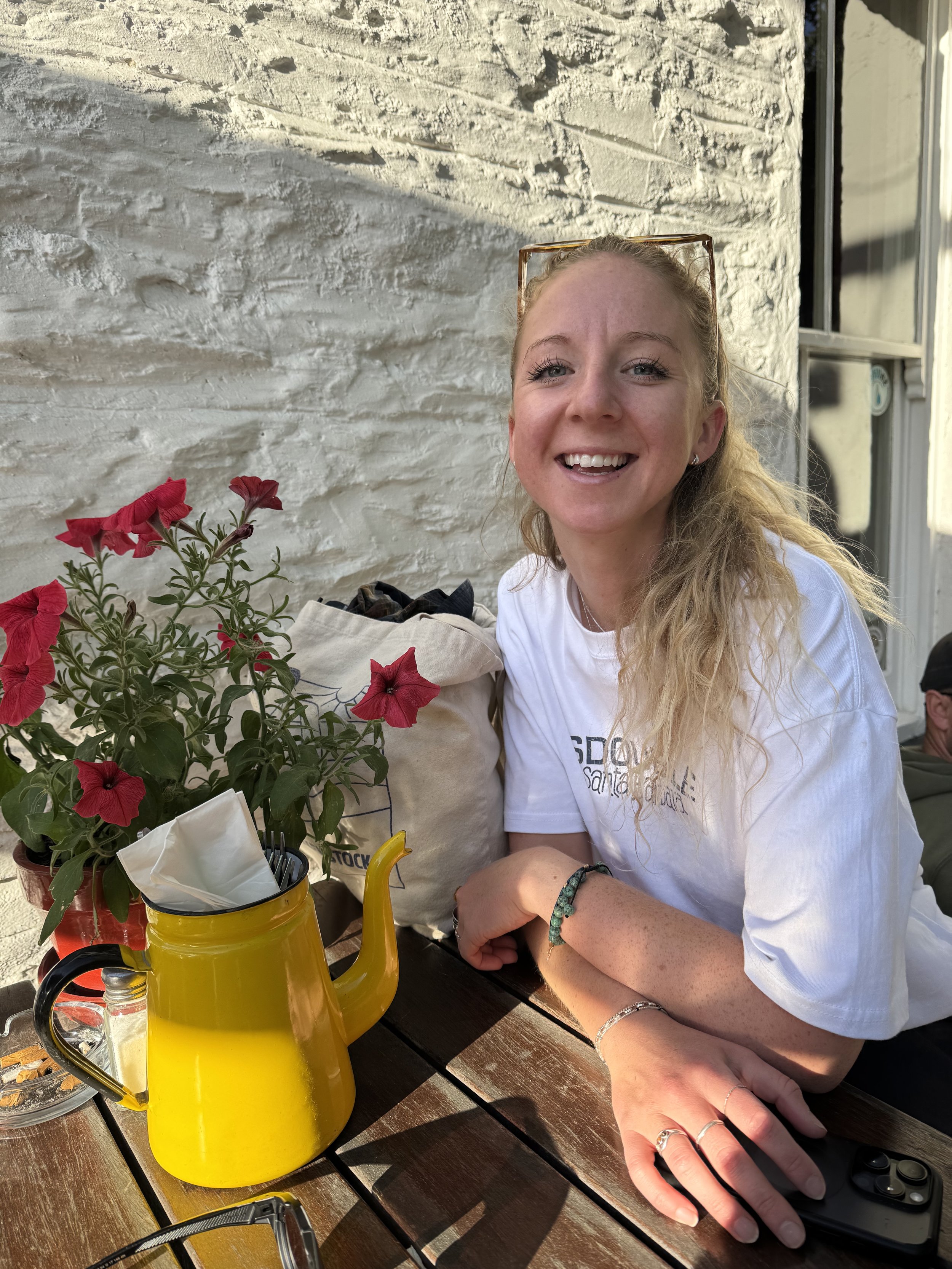
Hey, Welcome! I’m Amy
This is where you can learn more about me and my work. Have a scroll or use the navigation below ↓
01.
02.
03.
Why I do what I do
Like all humans, I want to live a life that leaves me feeling good. I wish I could say it was just that - but like many driving forces in life, my motivation to feel good comes from experiencing prolonged periods of bad.
I spent most of my early twenties falling in and out of poor mental health. Simply learning how to get back to - and maintain - a sense of normal was my first challenge. Through my own lived experience, therapy, and years of research and practice, I learnt how to navigate so many of the challenges that face people today: crippling anxiety, panic attacks, disordered eating, poor self-esteem and depression - to name a few.
When my life was no longer limited by fear, I realised I'd inadvertently begun to understand something important: that the suffering I'd experienced wasn't a character flaw. It was a pattern - one that could be understood, and with the right knowledge, fundamentally shifted. That understanding became everything.
How I got here
I didn't grow up around dinner table conversation about what happened at school - I grew up around conversation about why humans think, feel and behave the way they do. With a psychotherapist for a mother, psychology wasn't just a subject I discovered, it was the language of my household and it has shaped how I see everything.
And yet I began my career in a different field entirely - studying Urban Design and Planning, fascinated by how the environments we live in shape our health and wellbeing. It was during this time that I first discovered the Blue Zones and the concept of longevity (see Ikaria Retreat 2026) the neuroscience of behaviours, and the profound relationship between where we live and what this means for our health. These concepts still inform my work with health and wellbeing today, however two years post-qualification I still had questions that this field couldn't answer: I needed to know more about what was happening inside of people that drove their choices and behaviours on the outside - and what could be done to change this for the better.
Since then I have completed a Masters in Psychology with Distinction - my dissertation focused on the neuroscience of meditation and behaviour change. I qualified as an ICF accredited Coach, trained as a Psychological Wellbeing Practitioner with the NHS, worked as a Health Coach on the NHS Diabetes Prevention Programme, and spent time as a Health Coach at Numan working with GLP-1 patients. I am a qualified Mindfulness Meditation Teacher and hold a PGCert in CBT interventions for common mental health problems.
Aside from the letters behind my name, what’s important is this: when you come to work with me, you're not just getting credentials - you're getting someone for whom this is a way of life, grounded in neuroscience, behavioural science, mindfulness and gut-brain science. A different kind of 'knowing' if you like.
What drives me underneath it all is a genuine and unwavering curiosity about human suffering - where it comes from, why it persists, and how it can be changed. That curiosity never switches off - which at times can be a curse! - but when you sit down with me, it's entirely in your favour.
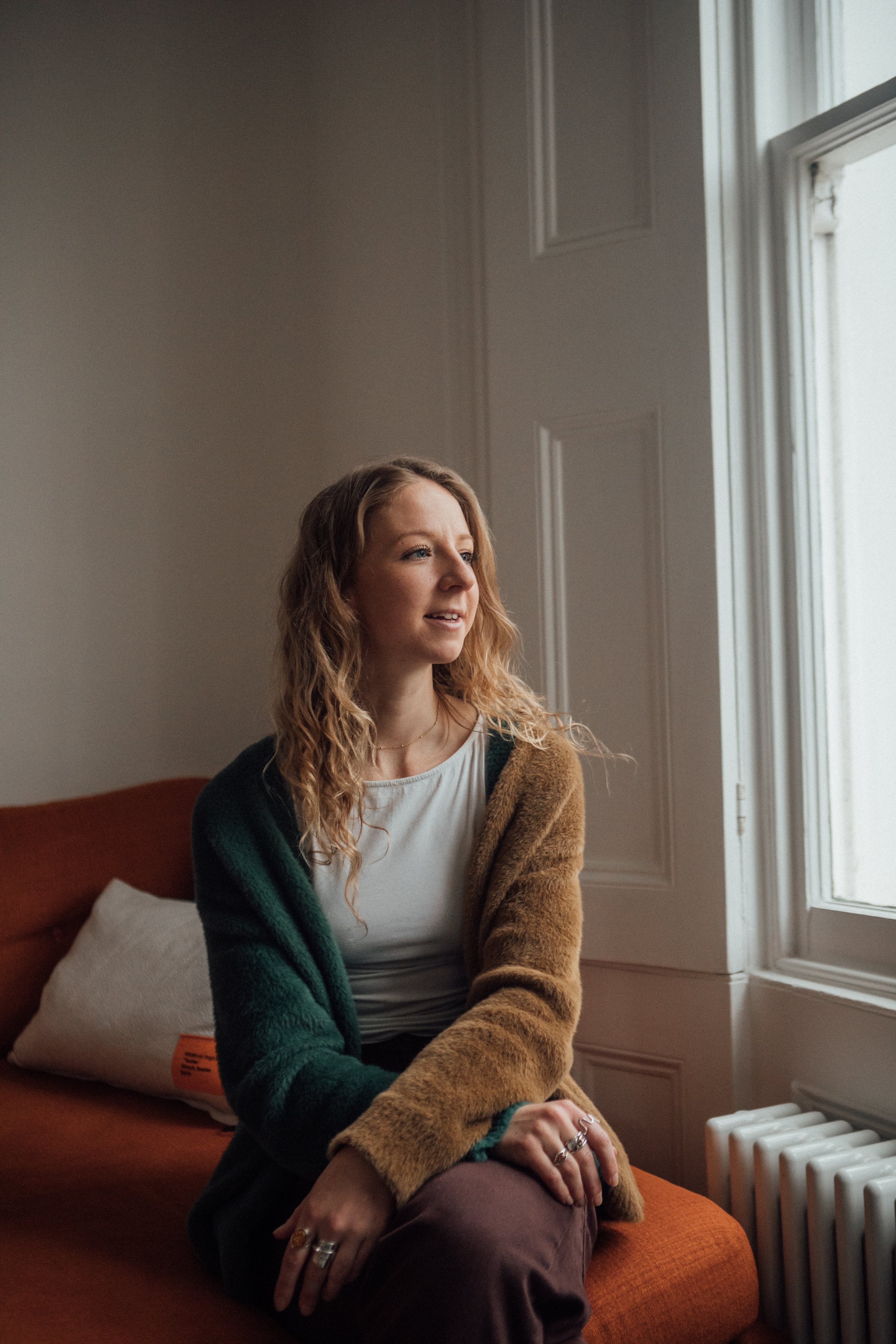
How I work
01 - Listening
The first thing I do is listen to get a real picture of what's actually going on. What you describe, how you describe it, what you leave out, where you hesitate - all of it tells me something. Gradually, together, the shape of the problem becomes clearer.
02 - Science & Insight
When something has a name, it is no longer just something happening to you.
At some point - and this is often the first real shift - I'll introduce the science behind what you're experiencing. Not as a lecture, but as an explanation: here is what is happening in your brain and nervous system, here is why this pattern exists, here is why it has persisted. For most people, this moment brings a particular kind of relief. Not because the problem disappears, but because it has a name. And when something has a name, it is no longer just something happening to you - it becomes something that can be understood, and with understanding, changed.
03 - Coaching
This is how knowledge gets encoded - neuroplastically - into your lived experience.
But knowledge alone is rarely enough. If it were, we would all simply think our way out of our patterns - and we know from experience that we can't. Humans are complicated, and the gap between knowing something and actually living differently is where most approaches fall short.
This is where the coaching relationship becomes the work. Through honest conversation, careful reflection, and a quality of attention that most of us rarely receive, something deeper begins to shift - not just your understanding of yourself, but your relationship with yourself. The way you speak to yourself, the way you perceive what happens to you and around you, the way you choose to respond rather than simply react - are the freedoms that change your life. This is how knowledge gets encoded - neuroplastically - into your lived experience. Not through receiving the information alone, but through the experience of being genuinely seen, challenged and supported through the process of change.